
Persons with Disabilities
Faithful with Disabilities in the Synodal Church: The Journey Continues
On November 19, the Dicastery for Laity, Family and Life brought together 35 persons with disabilities from 5 continents online to continue the synodal listening process that began in 2022
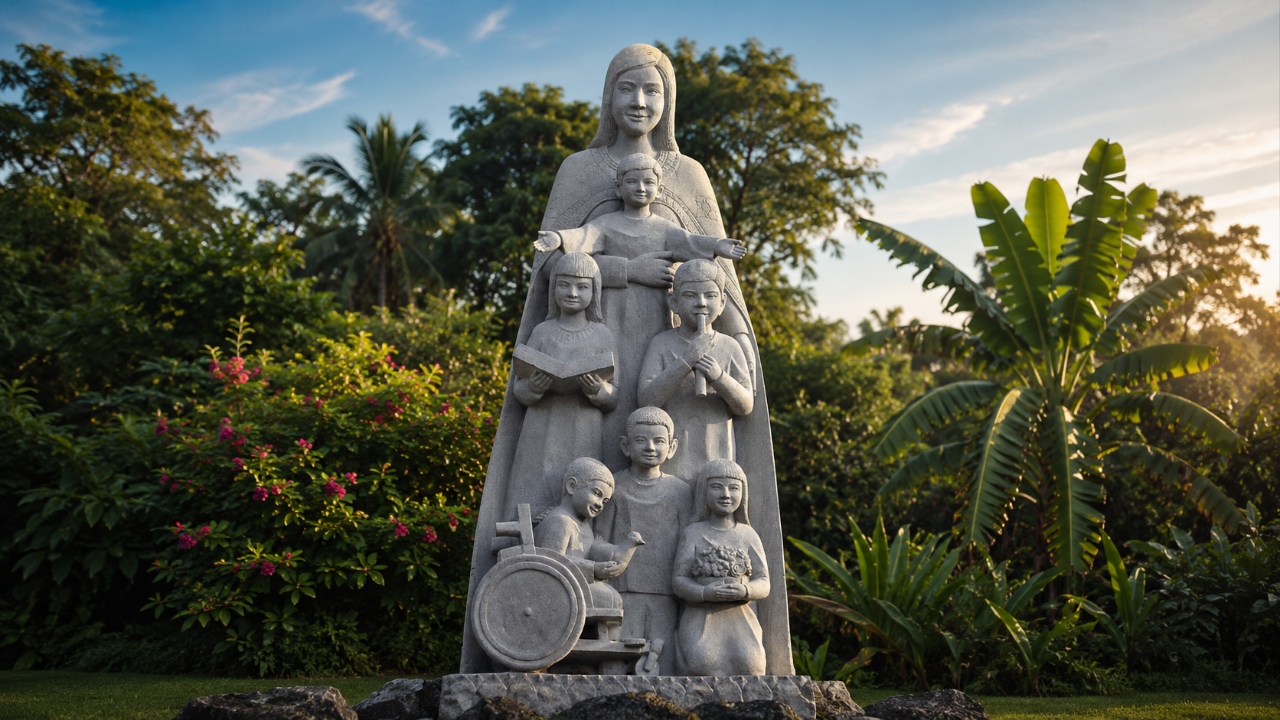
On November 19, the Dicastery for Laity, Family and Life resumed the synodal listening process for the faithful with disabilities that began in 2022, bringing together 35 persons with disabilities from five continents online.
The Reasons for the Meeting
Dr. Gleison De Paula Souza, Secretary of the Dicastery, opened the meeting by recalling the common vocation of all the baptized. Citing Lumen gentium, he recalled that the faithful of every state and condition are called to holiness, “each in their own way.” From this very call arises the responsibility of each person to participate in the Church’s mission, offering their gifts, abilities, and experience. It is in this light that De Paula Souza invited participants to experience the meeting as “an exercise in mutual listening.”
The Secretary recalled the words of Pope Leo XIV at the Piccolo Cottolengo in Claypole, Argentina, where he told persons with disabilities that their lives are “a blessing” for society. He asked that those words be reflected in parishes, in participatory organizations, and in everyday choices.
Particularly significant was the presence at the meeting of Sister Elena Massimi, F.M.A., Under-Secretary of the General Secretariat of the Synod, who helped place the group’s work within the broader context of the Synod’s implementation phase.
From Listening to Shared Responsibility
Marta Griselda Torres, who just a few days earlier had been the focus of a moving encounter with the Holy Father at the Piccolo Cottolengo Don Orione in Claypole, shared how she lives out her personal calling in her service as a catechist and how she decided to write a book to help all persons with disabilities feel loved by the Lord. Talitha Cooreman-Guittin, from the University of Fribourg, highlighted the richness of the Church’s reflection on this topic and urged that disability be treated as an issue not just for specialists, because, without listening to the voices of persons with disabilities, the Church misses out on something of the mystery of God and the Good News.
The Gift of Persons with Disabilities and Vocational Discernment
Bishop Paul Hendricks, Auxiliary Bishop of Southwark, emphasized that the inclusion of persons with disabilities is a gift to the Church. To view it as a favor is to lose sight of the contribution these persons make to the life and faith of their communities.
Journalist and writer Simone Stifani summarized the question that many believers with disabilities ask themselves regarding their vocation: “To survive in suffering or to live in love?” Stefano Toschi, in turn, traced the issue back to the way each person experiences their own limitations. In a world that deludes itself into thinking it is strong by hiding its fragility, he said, persons with disabilities fulfill a prophetic role, reminding us that this fragility belongs to everyone.
Under the Protection of Our Lady of Inclusive Love
His Excellency Bishop Dario Gervasi, Adjunct Secretary of the Dicastery, concluded the meeting by entrusting the journey that had just begun to Our Lady of Inclusive Love. The image originated in Battambang, Cambodia—where landmines continued to cause injuries even after the war—and was sculpted by Cambodian artists with disabilities. Five children gather under Mary’s mantle. One, in a wheelchair, holds a dove. Another, leaning on a crutch, carries flowers. That mantle, Monsignor Gervasi concluded, embraces everyone. Without it, no one can walk, “not even those who believe themselves to be strong.”
The November 19 meeting was the first in a series that will continue with further gatherings, leading up to the Ecclesial Assembly in October 2028.
23 November 2026
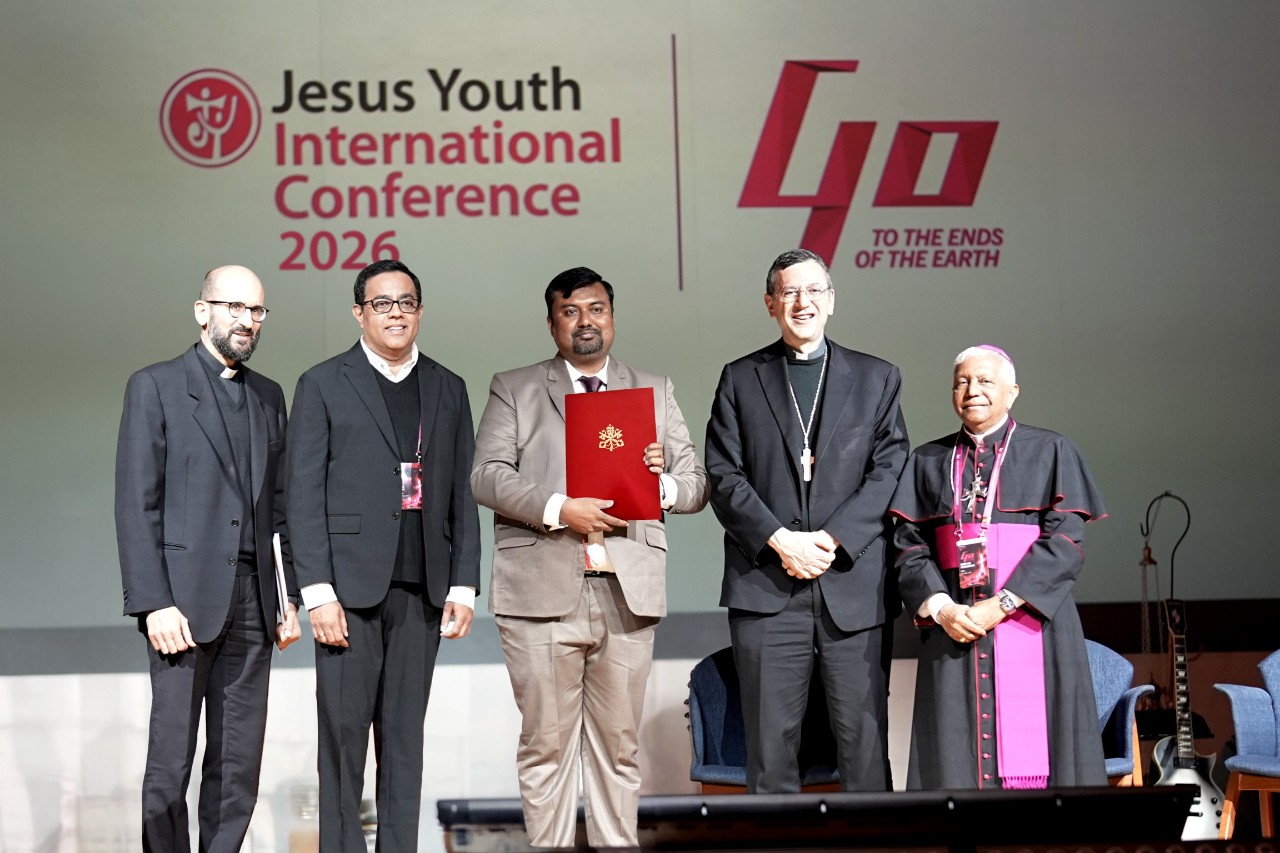
Jesus Youth: definitive Statutes approved and Audience with Pope Leo XIV
The International Conference of the ...
Read all >
The art of accompanying married couples: the 2026 National Family Ministry Meeting in Colombia
The National Family Ministry Meeting is ...
Read all >
Synodality is not a theory, but a living force for mission
The International Conference ...
Read all >
10 Years of Amoris Laetitia: sharing the Gospel and the Beauty of the Family with Younger Generations
Yesterday afternoon, Wednesday, ...
Read all >