
Pope Leo XIV
Magnifica Humanitas: Pope Leo XIV’s first encyclical
A Church journeying through human history: the challenges of our time call upon contemporary men and women
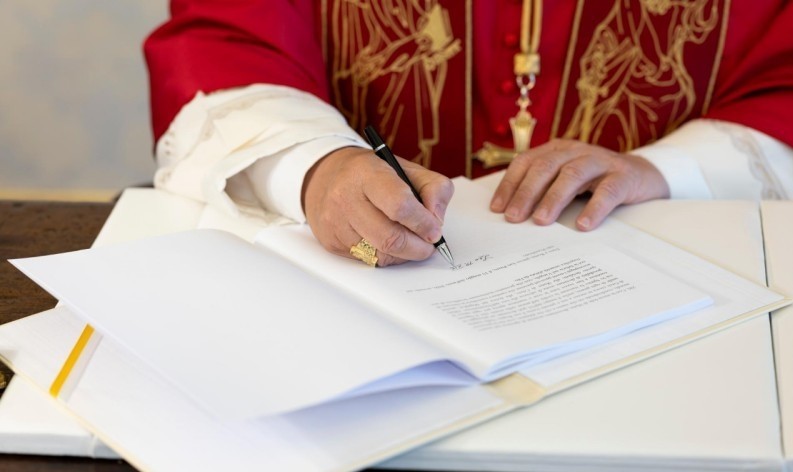
On 25 May 2026, the Holy Father Leo XIV’s first Encyclical Letter was published, entitled Magnifica Humanitas. On the protection of the human person in the age of artificial intelligence.
On the 135th anniversary of Rerum novarum, the Holy Father presents a reflection on the Church’s social doctrine in the age of artificial intelligence. The call is to safeguard “a magnificent humanity inhabited by God”, by promoting truth, the dignity of work, social justice and peace.
The Pope writes: “The Church is present in the world as a sign of unity for the entire human family. She recognizes today’s questions and challenges as the current setting in which to carry out her particular vocation of listening, dialogue and service, and of being responsive to everything concerning the lives of contemporary men and women.” (19).
Divided into five chapters, plus an introduction and a conclusion, Magnifica humanitas thus begins with a premise: technology is not a “a force antagonistic to humanity” (4), nor “inherently evil” (9). However, it “is never neutral, because it takes on the characteristics of those who devise, finance, regulate and use it”. Hence the Pontiff’s call to “build for the common good” and to “remain human”, following the logic of courageous co-responsibility, subsidiarity and communion, so that “the world once again will come to recognize the human heart as the place where God desires to dwell.” (16).
The family and young people: supporting them so as not to break what makes a society generative – the capacity to build a future
A strong emphasis in the Encyclical is placed on the family, founded on the stable union between a man and a woman: it is a “primary social good”, the “fundamental and irreplaceable cell of every community organization” (165), which must be supported during this period of transition, including through labour policies that promote stability and a human pace of life, so as to ensure the right work-life balance and safeguard that “capacity to build the future” which makes society generative.
“Supporting families and young people in this transition,” continues Pope Leo XIV, “requires choices that make stability feasible. As has been noted above, labor policies need to promote continuity and the quality of employment, countering insecurity as a normal condition of life and encouraging realistic paths for entry into the workforce and for professional growth. Second, measures are needed to ensure a healthy way of living, for without a proper balance between work, leisure and rest, families are weakened and young people struggle to develop a sense of responsibility. Furthermore, it is essential to invest in accessible education and retraining, so that the professional mobility demanded by the digital economy does not become a harsh selection between those who are able to update their skills and those who cannot. Finally, social ties must be supported, with networks and educational communities that accompany life choices and prevent uncertainty from giving rise to loneliness or addictions. If implemented, these technological transformations can be navigated without undermining the capacity to build the future, which is what makes a society prosperous".
Disarming AI by recognising fragility and finitude as spaces where relationships, care and openness to God and to others flourish
"Disarming AI", writes the Pope, “means freeing it from the mentality of 'armed' competition, which today is not limited simply to the military context, but is also an economic and cognitive phenomenon; to break the equivalence between technical power and the right to govern; to free it from monopolies and prevent it from dominating humanity. This task is ethical, technical and ecological because AI “is already an environment in which we are immersed and a power with which we must reckon” (110). Considerable space is devoted to a critique of transhumanism and posthumanism, which interpret progress as the overcoming of human limits. Instead, limitation is not a flaw to be eliminated, but a constitutive dimension of the person, because ‘the human being does not flourish in spite of limitation, but often through limitation’ (118), recognising in fragility and finitude the places where relationships, care and openness to God and to others come to fruition.
Engaging with new technologies in the light of the Gospel
In conclusion, the Pope invites all the faithful to engage with new technologies in the light of the Gospel, following “a sober yet demanding program of Christian life”, so that even in the age of AI, everyone may bear witness to the beauty of a magnificent humanity inhabited by God.
27 May 2026

Pope Leo XIV’s Message on the occasion of the World Day for Grandparents and the Elderly
No one is forgotten by God. Pope Leo ...
Read all >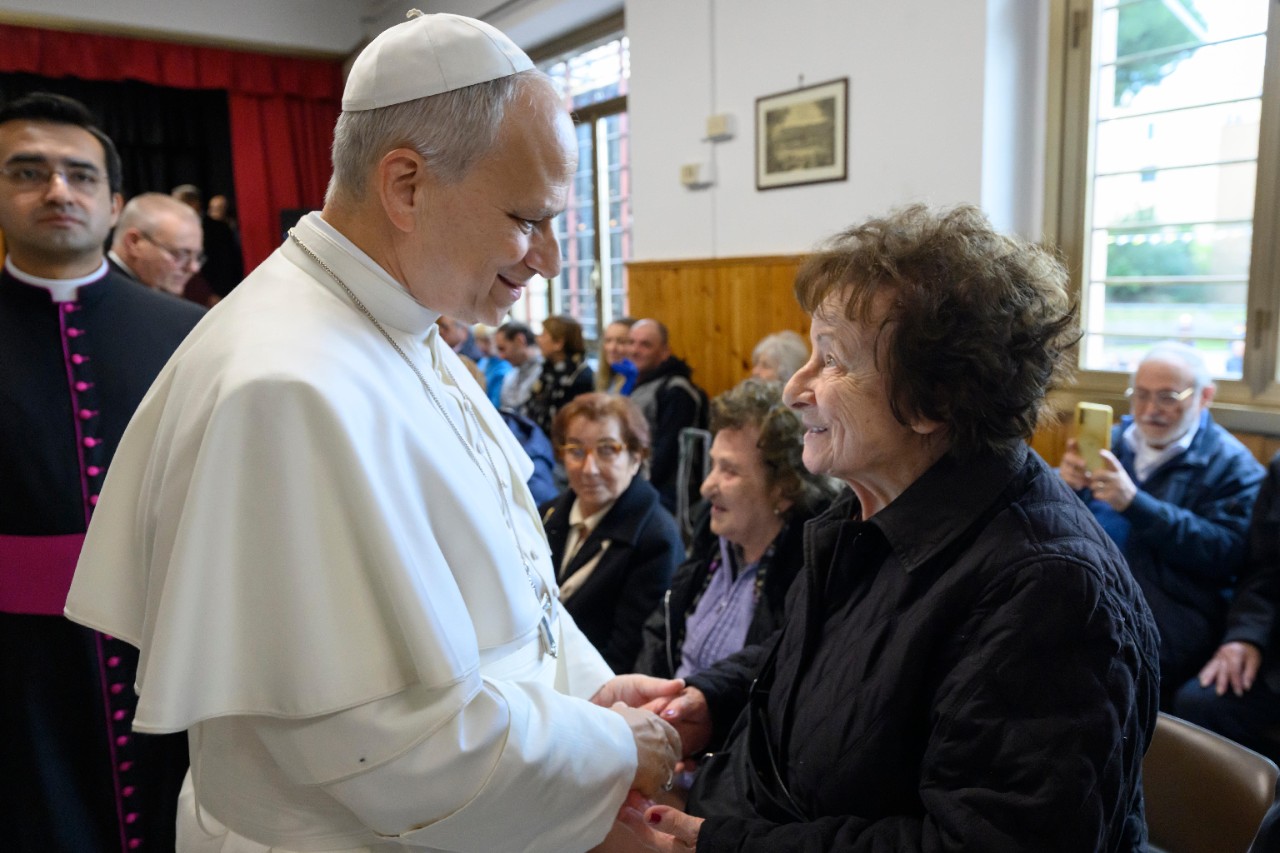
A Bridge Towards Heaven: The Magisterium of Fragility in a Time of Strength
On 10 June 2026, the study day entitled “A ...
Read all >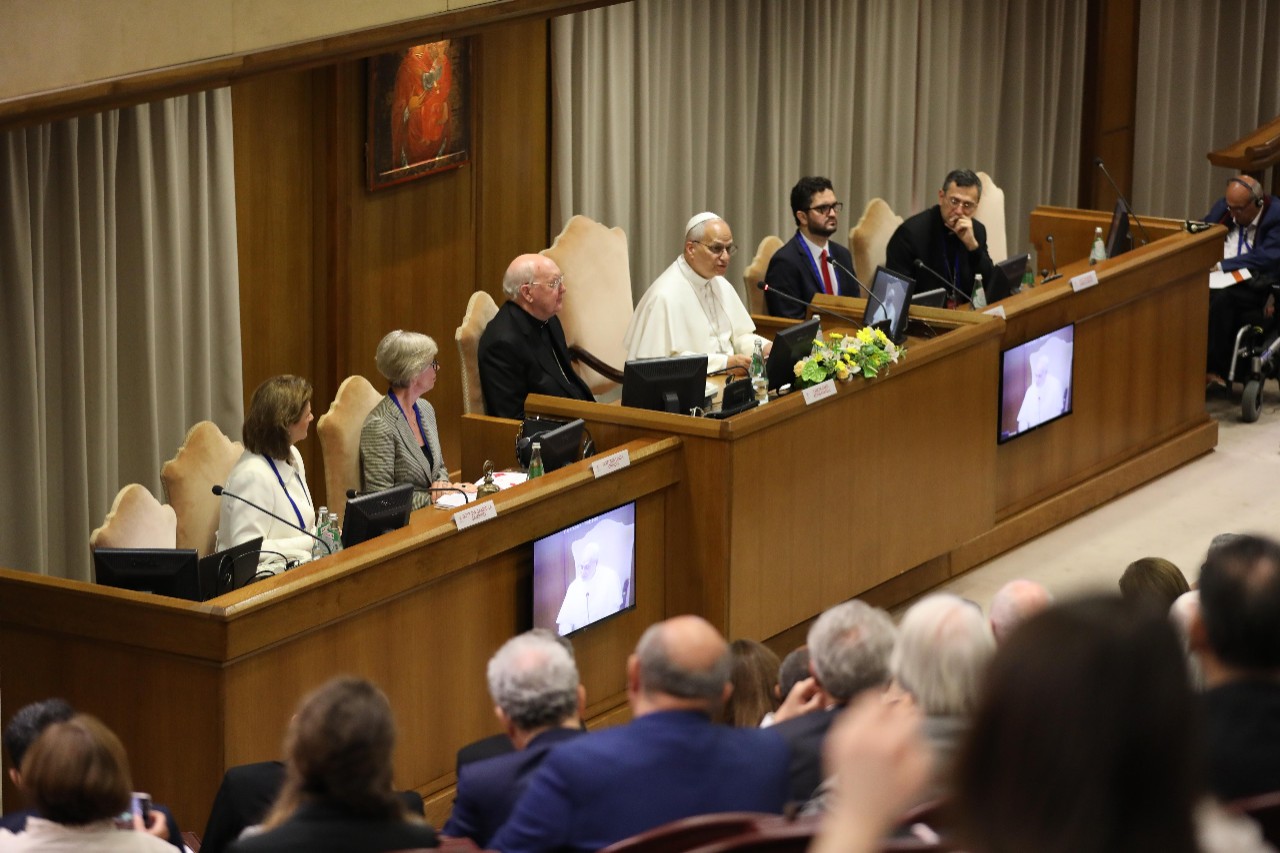
Cherish and nurture your gifts
Below is the Address given by the Holy ...
Read all >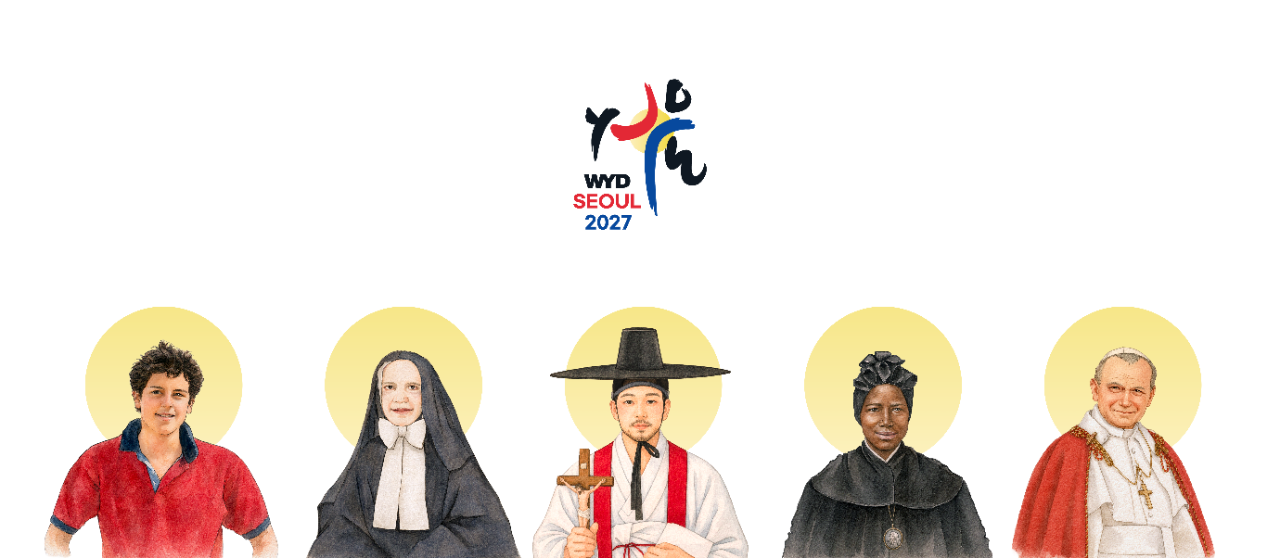
WYD Seoul 2027 Announces Five Patron Saints
The Local Organizing Committee (LOC) ...
Read all >