
Associations and Movements
Annual Meeting with the Moderators of International Associations of the Faithful: the first day
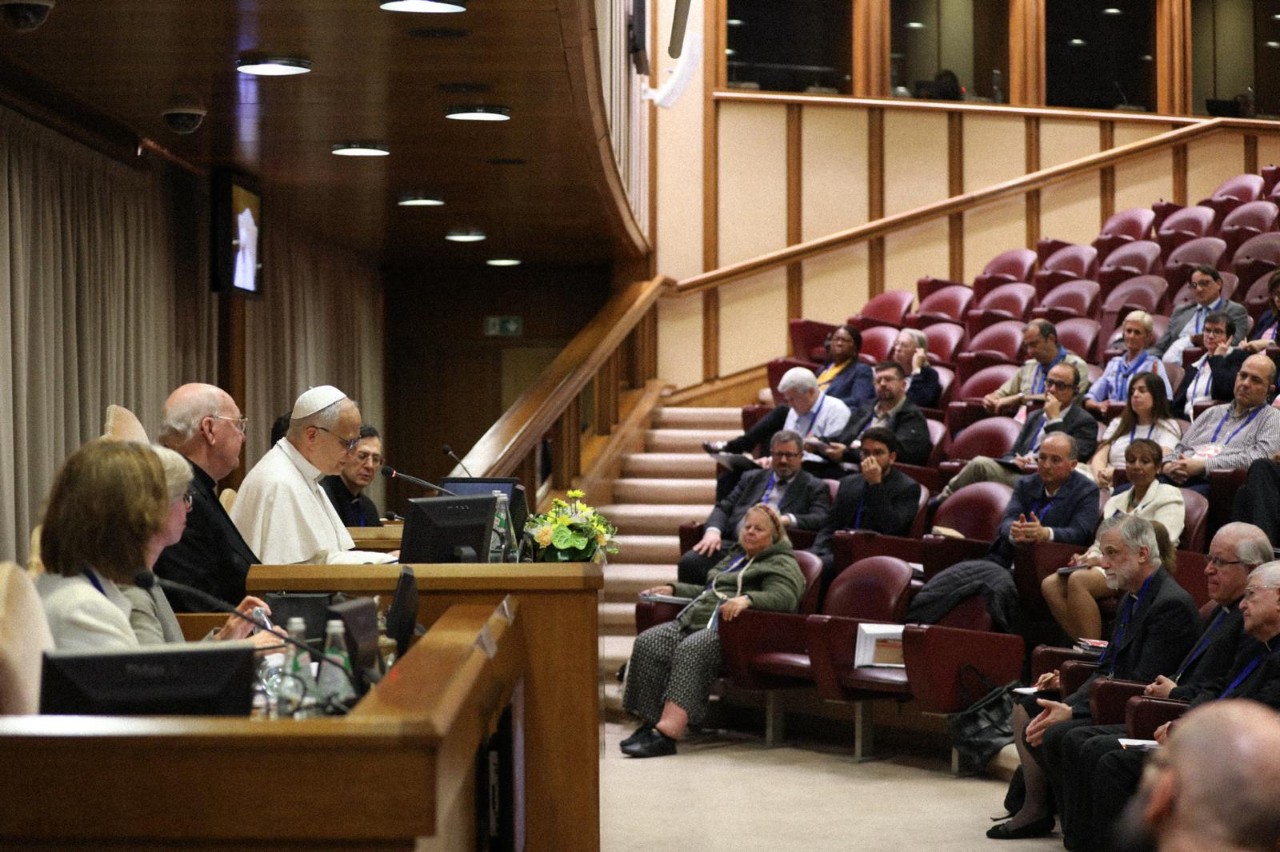
Cardinal Kevin Farrell opened the Meeting, which continued with presentations by experts on the topic and updates from the Dicastery. The Holy Father’s visit, group discussions and the recitation of the Rosary in the Vatican Gardens were the highlights of the first day’s programme.
‘A warm greeting to all of you, Moderators and Delegates of international associations of the faithful, ecclesial movements and new communities. […] Continuing in the tradition of recent years, this meeting too aims to address a topic of practical relevance that closely affects the life of the associations you represent. It concerns the foundations and practice of governance within associations.’ The meeting with the moderators of associations of the faithful, ecclesial movements and new communities – organised annually by the Dicastery for the Laity, Family and Life and currently taking place in the New Synod Hall today, 21 May, and tomorrow, 22 May – opened with these words from Cardinal Kevin Farrell, Prefect.
Serving, accompanying, guiding, safeguarding: the tasks of moderators in the governance of associations of the faithful
In his introduction, Farrell highlighted the tasks incumbent upon moderators, which can be summarised in five points. ‘The governance of an association of the faithful is responsible for guidance and representation; for the pursuit of the association’s aims; for the development of the association; for the faithful safeguarding of the charism; and for the spiritual and human well-being of its members.’ With regard to guidance and representation, the moderator ‘is responsible for guiding the association’. Those in charge “must, during their term of office, set a direction to follow. Alongside leadership comes representation, in the sense that those who govern must act as interpreters of the feelings and wishes of all in relation to society and the Church”.
Farrell: “You have the support of many capable collaborators, the backing of the Church and its pastors, and the assistance of the Holy Spirit”
The Prefect added, “that considering all the responsibilities incumbent upon those who govern can be daunting. These are, in fact, noble and lofty tasks. But you must not be discouraged. You have the support of many capable colleagues, the backing of the Church and its pastors, and the assistance of the Holy Spirit,” he concluded, “from whom you must ask, in a special way, for the gifts of prudence, counsel and wisdom, which will certainly be granted to you. […] I hope that all of you will treasure the things you hear over the coming days and share them as a gift with all the other members of your associations, movements and communities’.
An annual formation event: reflections and useful tools, working groups, communal prayer
Two presentations, immediately following the introduction, drew the participants into the heart of the annual formation event organised by the Dicastery. The first, on ‘Theological Aspects of Governance’, was delivered by Prof. Gill Goulding, full professor of systematic theology in Toronto, Canada. Professor Goulding’s reflection raised some fundamental questions regarding governance in ecclesial movements and associations, analysing scriptural precedents on the subject of governance and, finally, delving more deeply into certain theological foundations essential to the exercise of governance itself.
Rev. Prof. Paolo Gherri, Full Professor of Canon Law at the Pontifical Lateran University, introduced the “Principles of Governance in Associations of the Faithful”. Drawing an interesting parallel between steering a ship and leading an association, Gherri proposed and encouraged some more technical reflections on certain issues “which are now indispensable when it comes to the governance of large associations, all the more so if they are intent on expressing and indeed realising what the Church ‘is’ in the most authentic way”.
Following the awaited address by Pope Leo XIV, who had visited the New Synod Hall that morning to meet and greet all the approximately 200 participants, the proceedings continued with a panel discussion, organised by the Dicastery, on some of the “challenges” posed by the responsibility of governance, with a view to raising awareness of these issues and providing appropriate tools to address them.
Dr Linda Ghisoni, Under-Secretary for the Lay Faithful, focused on the origins of this year’s meeting and on the need for transparency on the part of those holding positions of governance. “It is clear,” said Ghisoni in her address, “that the culture of transparency we cultivate will demonstrate how much we care about the dignity of the people entrusted to us. Serving people and being a reflection of God’s transparency are a guarantee for the exercise of authority”.
Finally, Dr Philip Milligan and Dr Isabelle Cassarà, officials of the Dicastery, identified a number of challenges — and related guidelines — amongst those that emerge most frequently in the day-to-day work of accompanying all the entities under the Dicastery’s remit. Whilst Milligan outlined the characteristics of the association’s constitution as a form of legal agreement, Cassarà sought to define the conditions and principles of the collegial style with which the governing bodies of associations of the faithful should exercise their leadership functions; to offer some reflections on the formation of the decision-making process and, in particular, on the concept of consultation.
Following a period of dialogue with the speakers, the participants gathered in working groups to identify challenges and areas for improvement to be proposed for future discussion.
The recitation of the Rosary in the Vatican Gardens, led by His Excellency Monsignor Dario Gervasi, Adjunct Secretary of the Dicastery, brought the first day to a close in a spirit of prayer and communion.
21 May 2026
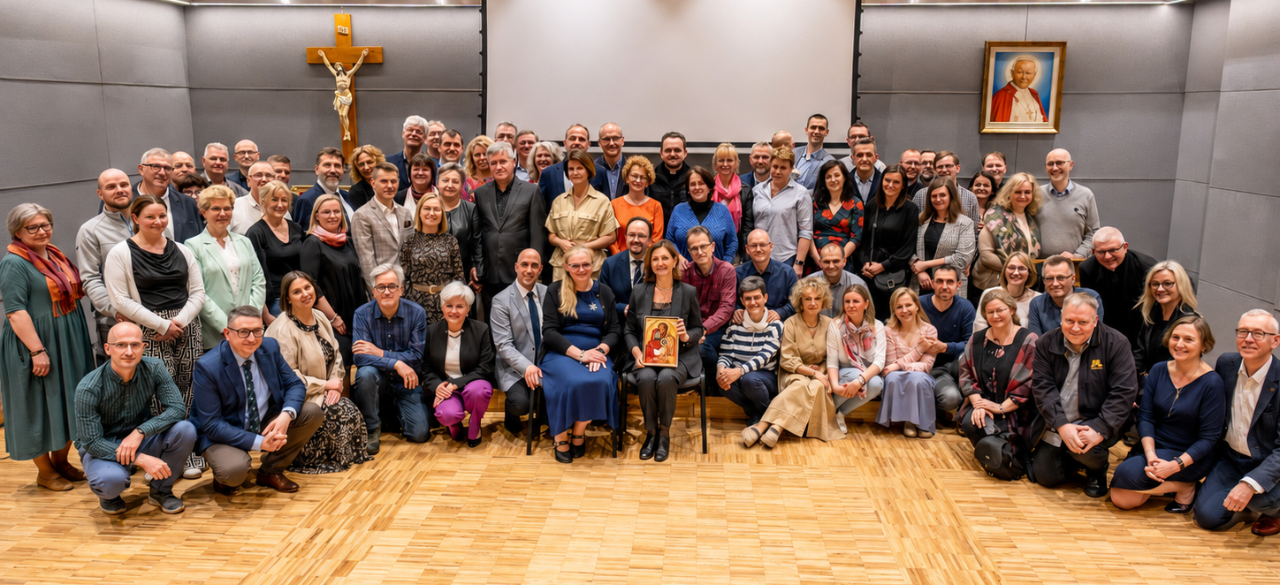
Life is always a good: Under-Secretary Gambino’s visit to Poland
Gabriella Gambino, Undersecretary of the ...
Read all >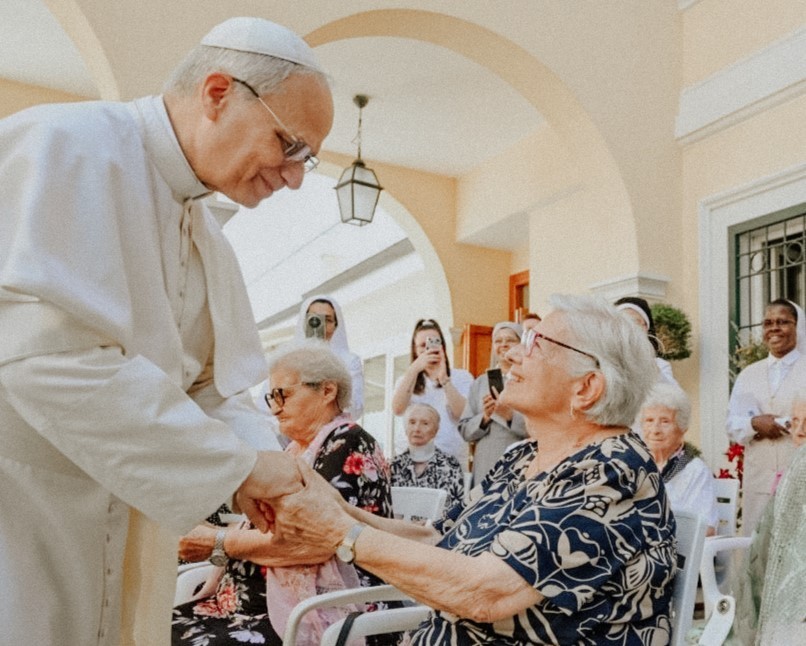
Pope Leo XIV’s Message on the occasion of the World Day for Grandparents and the Elderly
No one is forgotten by God. Pope Leo ...
Read all >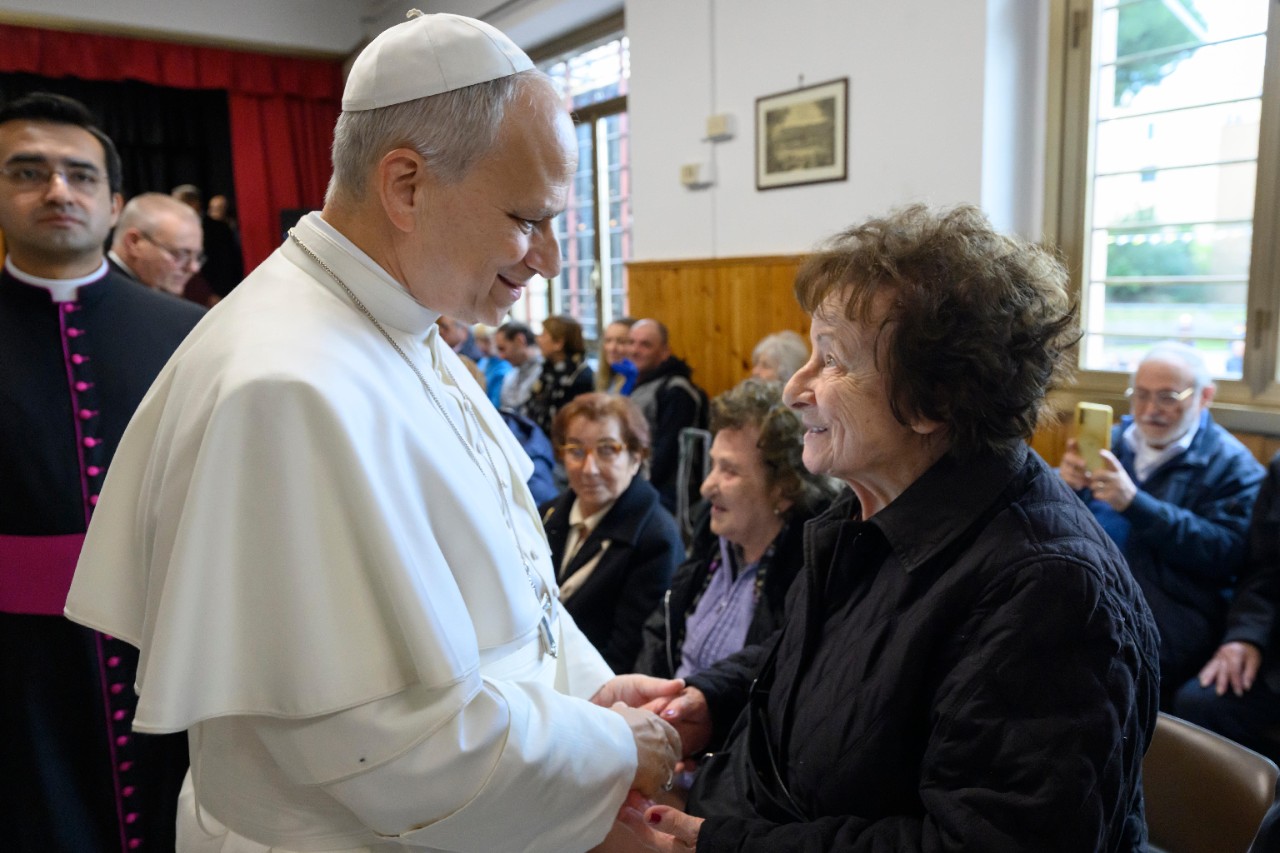
A Bridge Towards Heaven: The Magisterium of Fragility in a Time of Strength
On 10 June 2026, the study day entitled “A ...
Read all >
Magnifica Humanitas: Pope Leo XIV’s first encyclical
On 25 May 2026, the Holy Father Leo XIV’s ...
Read all >