
Family - Associations and Movements
Rimini Meeting, Gambino: Marriage Is a Vocation to Be Proclaimed to Young People
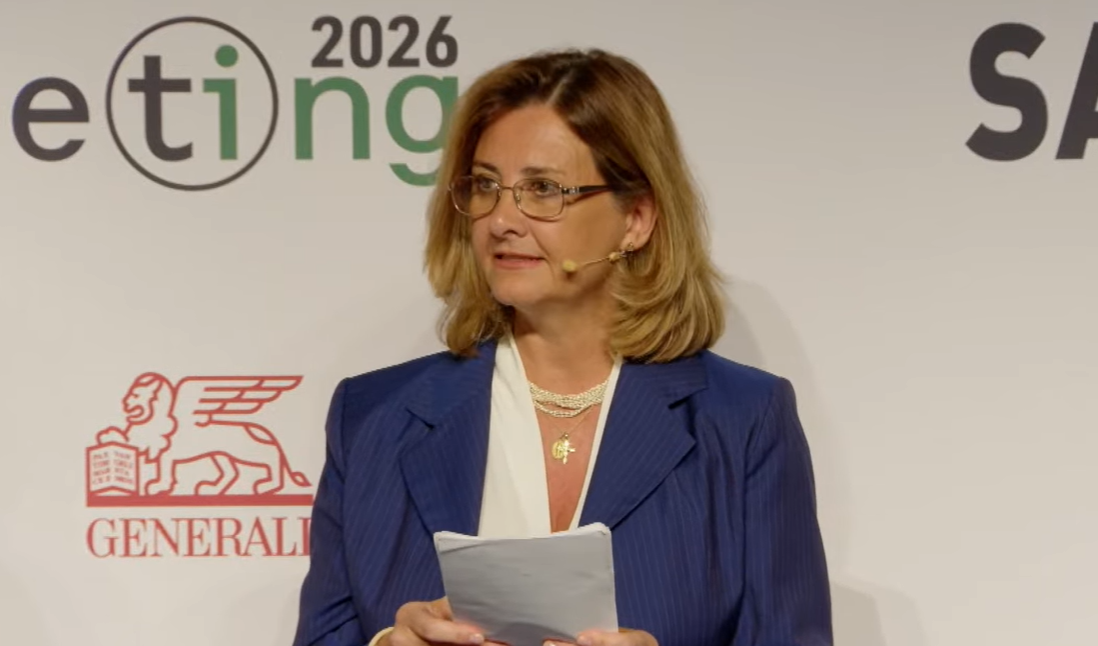
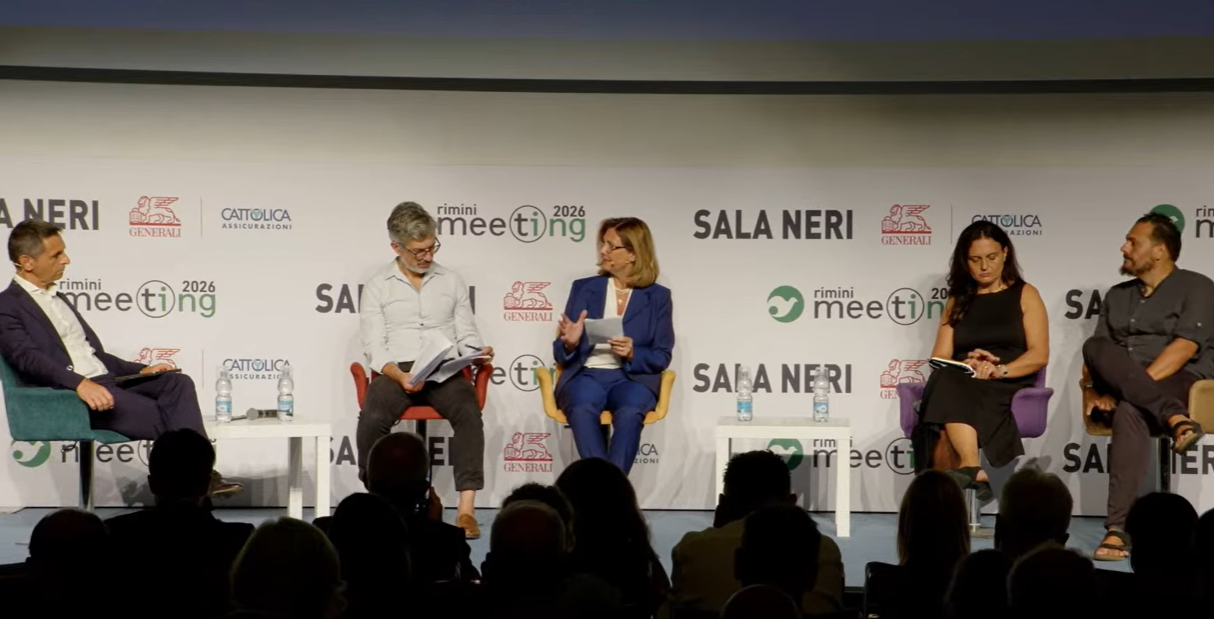
How can we proclaim to young people today the beauty of a promise that lasts forever? At the Meeting for Friendship Among Peoples, Gabriella Gambino, undersecretary of the Dicastery for Laity, Family and Life, offered some answers. Last Monday, August 24, in her talk on the theme “For the Human and for the Eternal: the Love That Generates,” she addressed the contemporary crisis of marriage and the difficulty younger generations face in making a lifelong commitment. Her reflection highlighted the need to rediscover marriage not only as a private choice of the couple, but as a reality with specific familial, social, and legal significance and, for Christians, as a vocation and a sacrament. At the heart of the talk lies the witness of families: for young people, in fact, it is not enough to hear others speak about marriage; rather, they need to encounter married couples capable of demonstrating, through their own lives, that fidelity, commitment, and self-giving are still possible.
How can we once again proclaim marriage to young people?
This question runs through the entire reflection. In a society where bonds have become more fragile and marriage is often perceived as a choice that can be postponed, an expensive ceremony, or even an obstacle to individual freedom, how is it possible to help young people still recognize its value? Gambino begins with a personal experience. When, at age 24, she first met the man who would become her husband, she recognized in that encounter something that went beyond a mere personal project: the certainty of being part of a greater plan, in which God had intended for her to meet, love, and bear children. It is precisely this experience that becomes the key to addressing the pastoral question: How can Christian families today bear witness to young people that faithful love—capable of lasting a lifetime—is truly possible? The first answer is witness. Young people need, above all, an example. They need to see that “forever” love does not belong to a bygone era, but can still be lived out in concrete terms. But witness does not exclude reason: we must also help young people understand what marriage is and why it continues to have human and social significance.
Marriage is not just about the couple
This reflection takes place within a context in which we are witnessing what the French sociologist Irène Théry has defined as démariage, the “de-matrimonialization” of society: the number of marriages—both civil and religious—is declining, and many of those that are celebrated do not stand the test of time. The separation between marriage and parenthood is also linked to a demographic crisis and a rejection of life, in which society loses its ability to open itself to the generation of its own future. Faced with this scenario, it becomes necessary to rediscover the public dimension of marriage as well. Marriage, even in its civil form, serves a function that goes beyond the recognition of the relationship between two people. It helps to structure sexuality and the generations, defining roles, responsibilities, identities, and protections. Family relationships thus acquire a name and a place: husband and wife, father and mother, son and daughter, grandparents and grandchildren.
This leads to a central point in this reflection: marriage is not simply the institution of the couple, but the institution of the family. Its strength does not concern only the two spouses, but extends to the relationships and identities that form around them, with a significance that reaches even into the public sphere. From this perspective, the law, too, takes on a specific meaning. Marriage lends public credibility to the spouses’ promise and provides a space of stability and security for the family and their children. It recognizes roles, responsibilities, and rights for each family member and thus helps shield family life from extreme unpredictability and uncertainty. The law, therefore, is not opposed to love. Its task is to recognize that human love needs form, order, and certainties. The bond is not meant to extinguish love, but to safeguard it.
The Bond as the Mature Language of Love
This is precisely one of the aspects to be rediscovered in dialogue with young people. The Christian message about marriage should not be reduced to a moralistic proposal aimed at avoiding cohabitation. Rather, it should show that the bond is the mature language of love: the ability to build lasting relationships, going beyond the fleeting emotions of the moment and cementing them in fidelity and promise. When the bond is stripped of meaning, love does not necessarily become freer. It becomes more fragile. This perspective also allows us to reinterpret the meaning of freedom. Being free does not mean remaining indefinitely open to new possibilities without making a definitive decision. Freedom is also expressed in the ability to choose a definitive gift. In marriage, spouses are not called upon to start from scratch every day: they return to the “yes” that brought them together as a couple. Fidelity thus becomes the living memory of a decision freely made.
Christian Marriage as a Vocation
To this human and social dimension, Christians add a decisive one: marriage is a vocation and a sacrament. The difficulty younger generations have in making a definitive commitment does not concern only civil marriage. Religious marriages are also seeing a sharp decline. This raises a question directed specifically at the Church: what are we failing to proclaim to young people? What are they not receiving that would enable them to understand the power of the sacrament? The proposal is to begin presenting marriage as a true vocation—not simply a state of life, but a call to which two people are invited to respond together through a process of discernment.
For this reason, marriage—from the perspective outlined by Gambino—should be proclaimed to children, adolescents, young people, and adults who wish to be married in the Church. The Church’s prayer life should also make this call more visible, promoting prayer so that young people may recognize and embrace the vocation to marriage. Furthermore, the Christian “forever” cannot be presented as a heroic feat entrusted exclusively to the spouses’ own strength. Sacramental marriage is the journey of two people sustained by grace. Christ enters their story, remains with them, sustains them, helps them get back up after they fall, forgive one another, and bear one another’s burdens. The marriage vow thus becomes possible not because of any presumed self-sufficiency on the part of the spouses, but because there is a greater faithfulness that sustains their own faithfulness: God’s faithfulness, the emunah.
A pastoral approach that reveals grace at work
It is here that the question of marriage becomes truly pastoral. Wedding preparation cannot be reduced to bureaucratic formalities nor limited to an explanation of rights and duties. It must help the spouses recognize that Christ enters their story, sustains, and renews their love. Family ministry is therefore called to accompany a vocation and to help people understand the spiritual power of the sacrament. But above all, young people need to see grace at work in married couples. A Christian family that lives out its fidelity, faces difficulties, learns to forgive, and continues to enshrine its marriage vows becomes, through its very life, a concrete witness. It is this lived experience that can make what might otherwise remain merely an abstract principle understandable to young people. Proclaiming the beauty of marriage, in fact, does not simply mean repeating a doctrine. It means showing why that reality is human, desirable, and fruitful, and how human love can become a possible reality when illuminated by faith.
Restoring Marriage’s Meaning
The challenge therefore involves two inseparable fronts. On the one hand, the Church is called to proclaim marriage as a vocation. On the other, she must help restore its social and anthropological meaning in a culture where its public function appears increasingly weakened. Marriage strengthens relationships between men and women and across generations, and fosters values such as trust, reciprocity, and responsibility. Openness to life, too, requires a context of trust and stability. In this sense, the “demographic winter” is not merely a matter of birth rates. It also reflects an inner climate in which the search for security and the fear of fragility prevail, leading to a closure to life.
It therefore becomes urgent to educate children and young people in an emotional life capable of understanding the beauty of sexual difference, the call to the total and definitive gift of self, and openness to life. It is not enough to pass on to the younger generations the desire to “start a family”; we must also help them understand the meaning and beauty of marriage. Ultimately, Gabriella Gambino’s reflection returns to the young woman who, many years ago, entered the church dressed in white to get married. She was unfamiliar with the terms used today to describe the crisis of marriage. She would not have known how to speak of démariage, or of the social function of the bond. But she knew one thing: that Someone had always had her in mind, that He had a plan for her, and that she could trust that Someone. It is perhaps from this certainty that the Church’s message to the younger generations can also begin anew: not merely to explain marriage, but to demonstrate it; not merely to propose a doctrine, but to accompany a vocation; not merely to prepare for the wedding, but to support the spouses along life’s journey with the certainty of God’s faithfulness to their human love.
27 August 2026

Confidite, ego vici mundum: The Theme Song of WYD Seoul 2027
The official Theme Song for the ...
Read all >
Cardinal Farrell: With One Year to Go Until the Start of WYD Seoul 2027, Young People Are Increasingly at the Center
With the publication of a press ...
Read all >
One Year to Go
With one year remaining before World Youth ...
Read all >
One Flesh: In Praise of Monogamy
A training course for family ministry ...
Read all >