
The Dicastery
The Dicastery for Laity, Family and Life was established by Pope Francis on 15 August 2016 with the Motu Proprio Sedula Mater that describes the responsibilities and functions that previously pertained to the Pontifical Council for the Laity and the Pontifical Council for the Family. The Dicastery is governed by a Statute that was approved ad experimentum on 10 April 2018 and entered into force on 13 May 2018. The Dicastery is presided over by a prefect and assisted by a secretary and two lay under-secretaries. The members and consultors of the Dicastery include men and women of the lay faithful, single and married, who are engaged in different fields of activity and come from various parts of the world. There is an ample staff of both lay people and clerics who are selected, as far as is possible, from diverse regions of the world.
The Dicastery has responsibility in the areas that fall within the competence of the Apostolic See for the development of the life and apostolate of the lay faithful, for the pastoral care of young people and the family and its mission according to God's plan, and for the protection and support of human life. The Dicastery supports and organises international conferences and other initiatives related to these themes that take into account both the ecclesial and broader spheres of society.
It is the responsibility of the Dicastery to advance the vocation and mission of the lay faithful in the Church and in the world, both as individuals and as members of associations, movements and communities. It is to foster in them an awareness of their shared responsibility for the life and mission of the Church by virtue of the sacrament of Baptism and according to the various charisms received so that all can build up the Church together. The Dicastery encourages the active and responsible presence of the lay faithful in parish and diocesan life and in the consultative governing bodies of the universal Church. At the same time, it pays particular attention to their specific mission of animating and advancing temporal reality. It also evaluates requests to the Apostolic See presented by episcopal conferences that ask for new ministries and ecclesiastical offices to be established according to the needs of particular Churches. The Dicastery erects associations of the faithful and international ecclesial movements, and approves or recognises their statutes. It examines administrative appeals relating to matters within its competence. It expresses the concern of the Church for young people and sustains the Holy Father's initiatives in the field of youth ministry. A major part of this activity is the preparation of World Youth Day. The Dicastery also works to broaden ecclesial reflection on the identity and mission of women in the Church and in society.
The Dicastery is responsible for the pastoral care of families. It defends the dignity and well-being of the family founded on the sacrament of marriage, and affirms its rights and responsibilities in the Church and in civil society. The Dicastery seeks to discern the signs of the times in order to identify the opportunities that arise to enhance the family according to God's plan and to address the challenges being encountered. It organises international conferences and events, in particular the World Meeting of Families. It follows the activities of institutes, associations, ecclesial movements and Catholic, national and international organisations that have the aim of serving the well-being of families. It also follows up the development of doctrine on the family and its dissemination through appropriate catechesis. With a view to providing concrete learning resources, the Dicastery encourages studies on the spirituality of marriage and the family. It offers guidelines for programmes addressed to engaged couples and young couples, and support for families in the education of young people in the faith and ecclesial and civil life. It gives particular attention to intergenerational dialogue, as well as to the poor and the marginalised. It also encourages the receptiveness of families to the adoption and fostering of children and to the care of the elderly. In order to achieve these goals and to ensure a common direction in studies of marriage, family and life, the Dicastery maintains a direct link with the John Paul II Pontifical Theological Institute for Marriage and Family Sciences.
Finally, the Dicastery aims to support and coordinate initiatives for the protection of human life from conception to natural death, while taking into account the needs of each person at different stages of their development. It supports and encourages organisations and associations that help women and families to accept and preserve the gift of life, especially in the case of difficult pregnancies, and to avoid the use of abortion. It supports programmes and initiatives designed to help women who have had an abortion. The Dicastery also has the task of researching and fostering the education of the faithful in Catholic moral doctrine and the magisterium of the Church, in the major problems of biomedicine and law relating to human life and in the ideologies pertaining to human life and the reality of humanity. In relation to these issues, the Dicastery has recourse to the competence of the Pontifical Academy for Life.
News
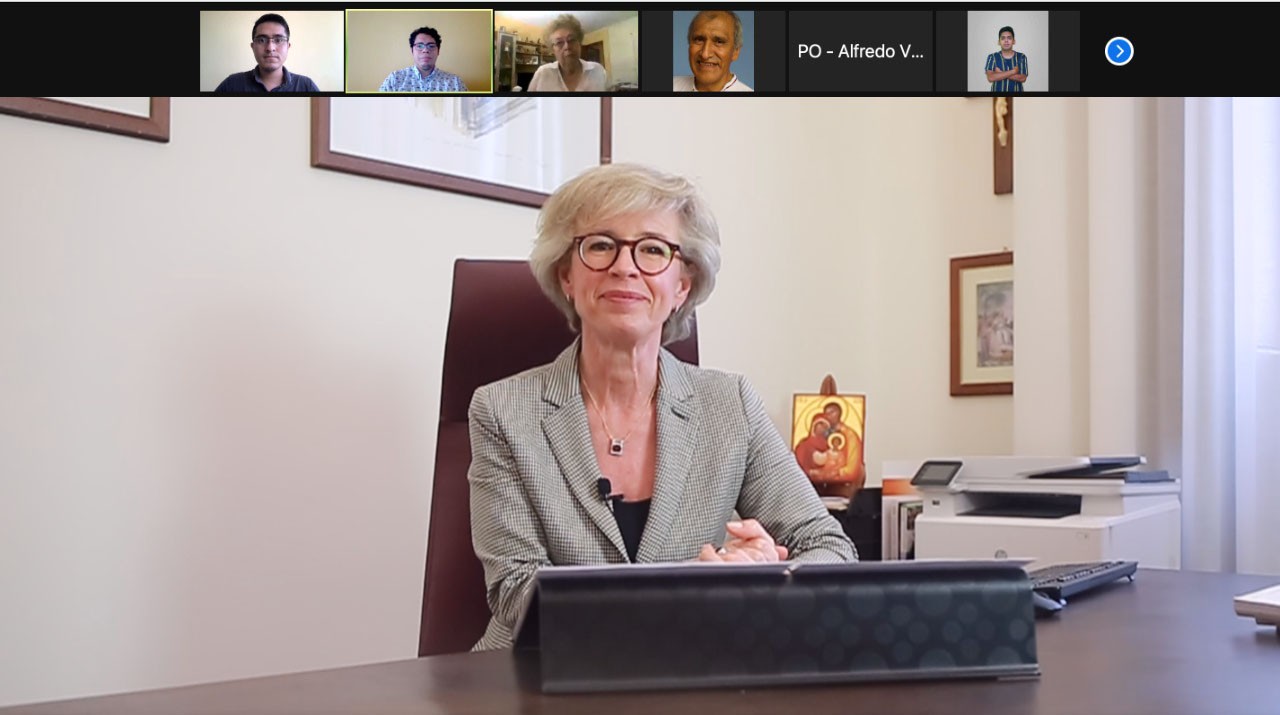
Ecclesial movements
Linda Ghisoni brings the greetings of the Dicastery to the First National Assembly of ecclesial movements in Peru
“Step outside of repetitive habits, projects, or ways of meeting, and abandon self-referentiality, so as to promote better mutual knowledge and cohesion, and to grow in authentic communion.” This is ...

Elderly
Gabriella Gambino gives a talk at a COMECE seminar on The elderly and the future of Europe
On 1 March, Professor Gabriella Gambino, Undersecretary of the Dicastery for Laity, Family and Life, took part in a webinar on the subject of “The Elderly and the Future of Europe”. It was held on an ...

Elderly
Address of Fr. Alexandre Awi Mello on the institution of the World Day of Grandparents and the Elderly
On 11 February, l’Osservatore Romano published an address of the Secretary of the Dicastery, Fr. Alexandre Awi Mello, I. Sch., on the institution of the World Day of Grandparents and the Elderly, ...